01 de marzo de 2026 · Green Dome
Sativa, indica, hybrid: is the classification system actually useful?
For decades everyone assumed sativas gave energy and indicas gave relaxation. Modern cannabis science says it's far more complicated — and the old labels may be misleading you.
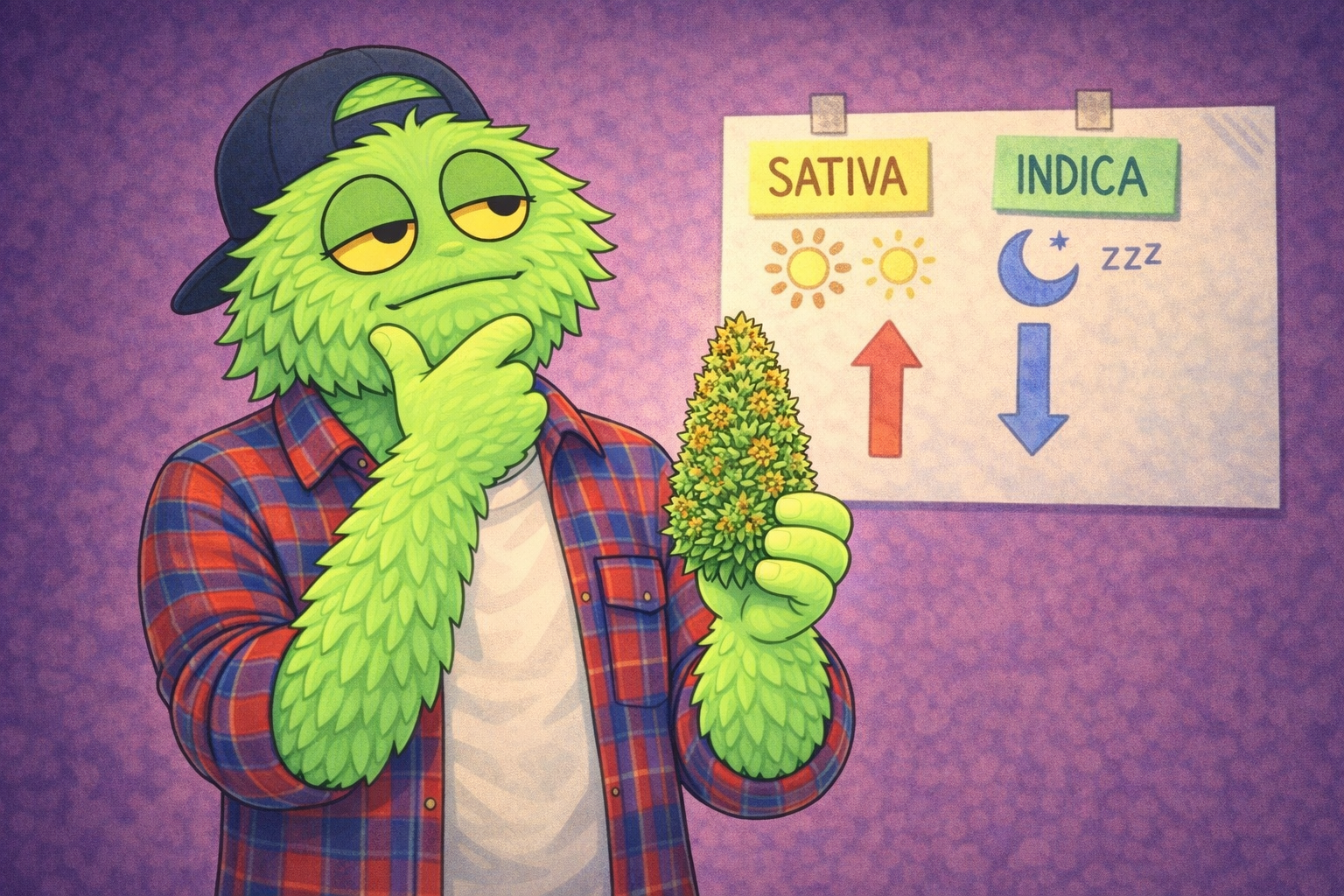
«Calling cannabis ‘sativa’ or ‘indica’ is a bit like judging wine only by the shape of the bottle.»
Where did sativa and indica come from?
Cannabis sativa was classified by Linnaeus in 1753, describing tall hemp plants. Cannabis indica was named by Lamarck in 1785, describing shorter plants from India used for hashish. The modern association of “sativa = energising, indica = sedating” is largely a folk taxonomy that emerged in the North American cannabis market in the 1970s-80s, spread by growers and users, not scientists.
What does the science say?
A 2015 study by Sawler et al. in PLOS ONE found that genetic analysis of 81 strains showed significant overlap between plants labelled sativa and indica — many were genetically indistinguishable. A 2018 meta-analysis confirmed that terpene profiles, not indica/sativa labels, better predicted reported effects.
Sources: Sawler, J. et al., PLOS ONE, 2015; Lewis, M.A. et al., Cannabis and Cannabinoid Research, 2018.
What actually predicts the effect?
- Your individual biology — genetics, tolerance, prior experience, mood, setting.
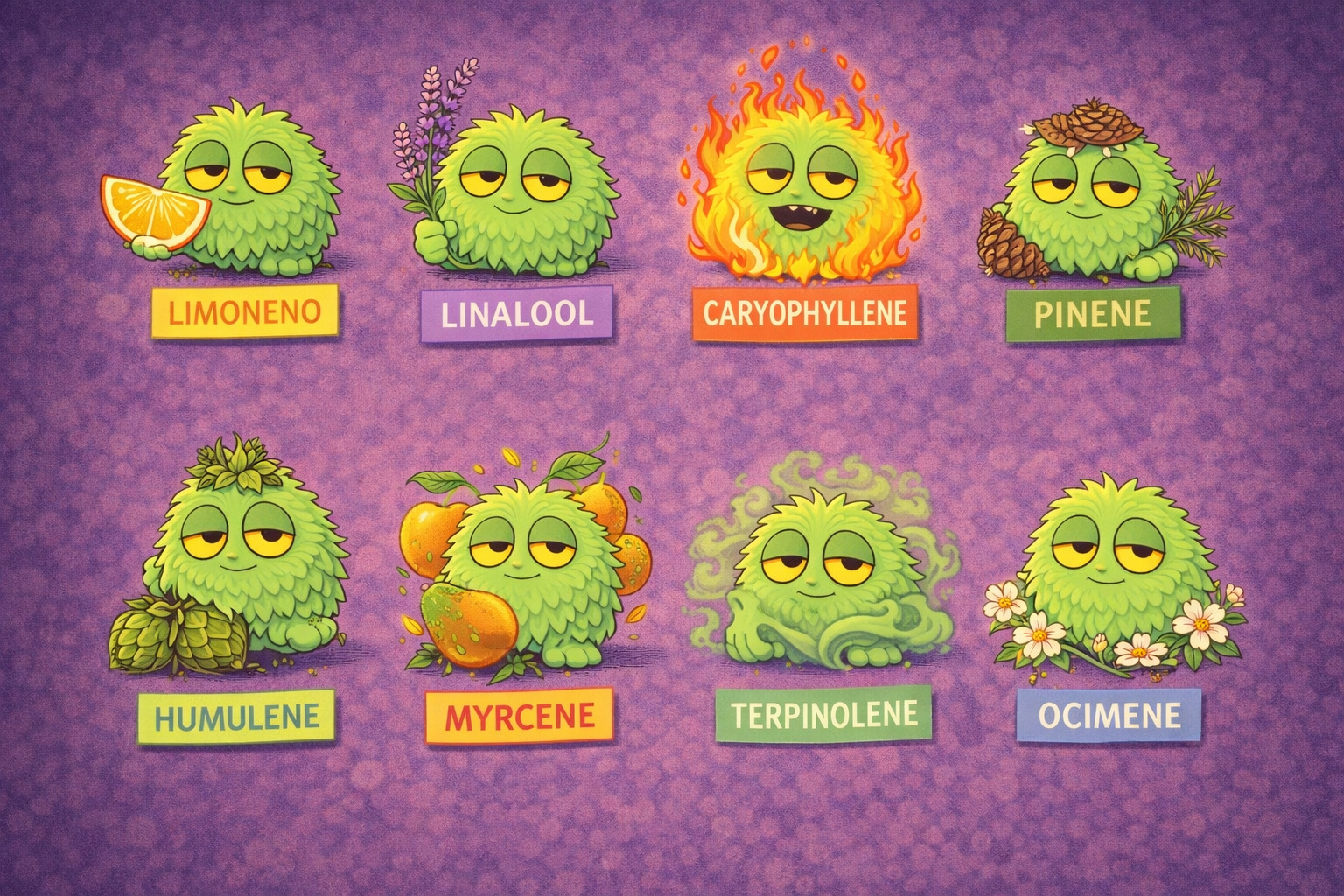
- The terpene profile — myrcene toward relaxation, limonene toward mood elevation.
- THC:CBD ratio — high-THC with little CBD tends to be more intoxicating.
Bibliography: Sawler et al. (2015) · Lewis et al. (2018).