15 de febrero de 2026 · Green Dome
Terpenes 101: why cannabis smells the way it does and why it matters
Earthy, citrusy, piney, sweet — the scent of cannabis is not random. Terpenes are the molecules behind the aroma and, increasingly, scientists think they shape the effect too.
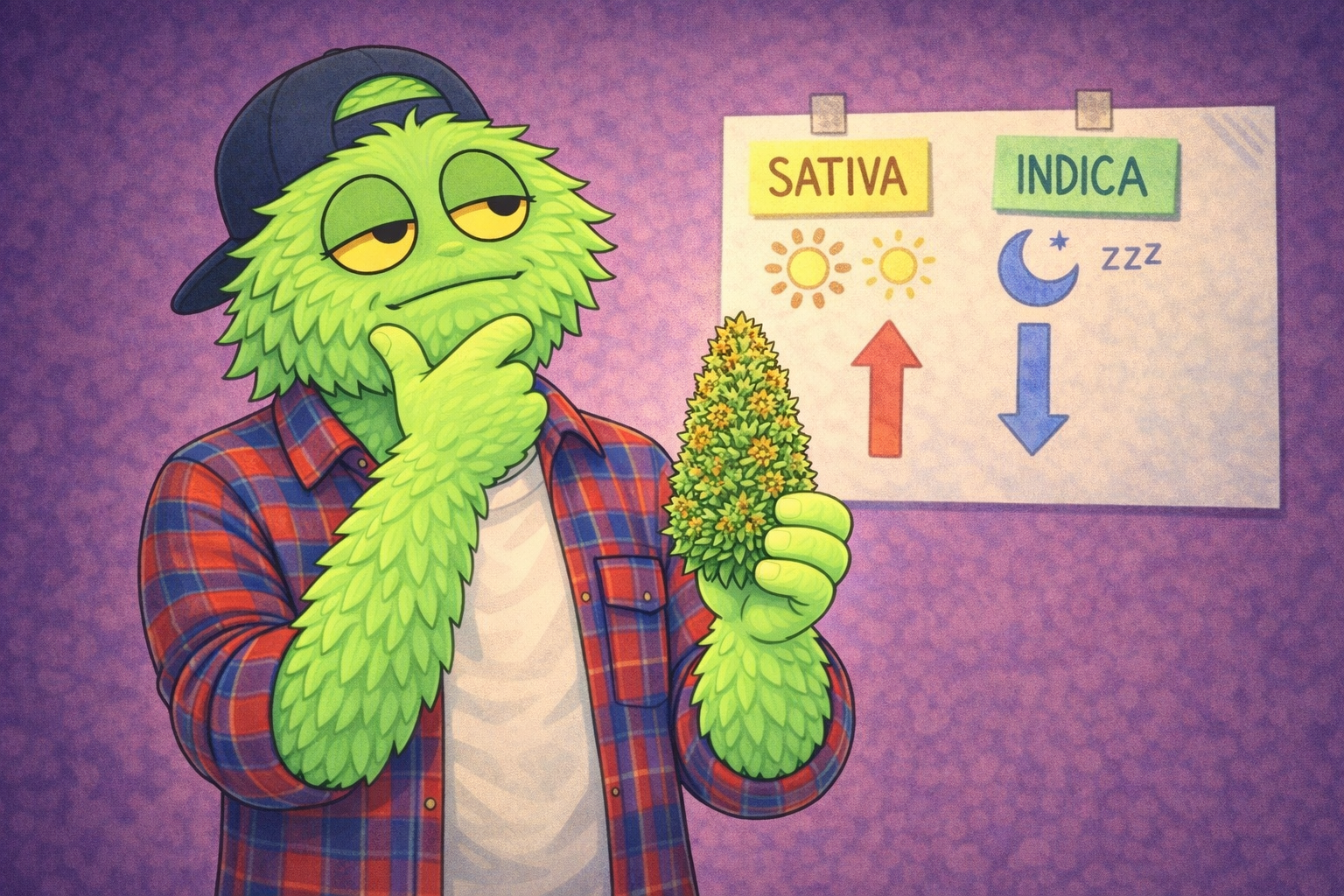
«The nose knows. Terpenes are nature's chemical fingerprints — and cannabis has over 200 of them.»
What are terpenes?
Terpenes are aromatic organic compounds produced by many plants — not just cannabis. In cannabis, terpenes are produced in the same trichomes that produce cannabinoids like THC and CBD. The cannabis plant produces over 200 different terpenes, though only a handful appear in significant concentrations in any given variety.
The most important cannabis terpenes
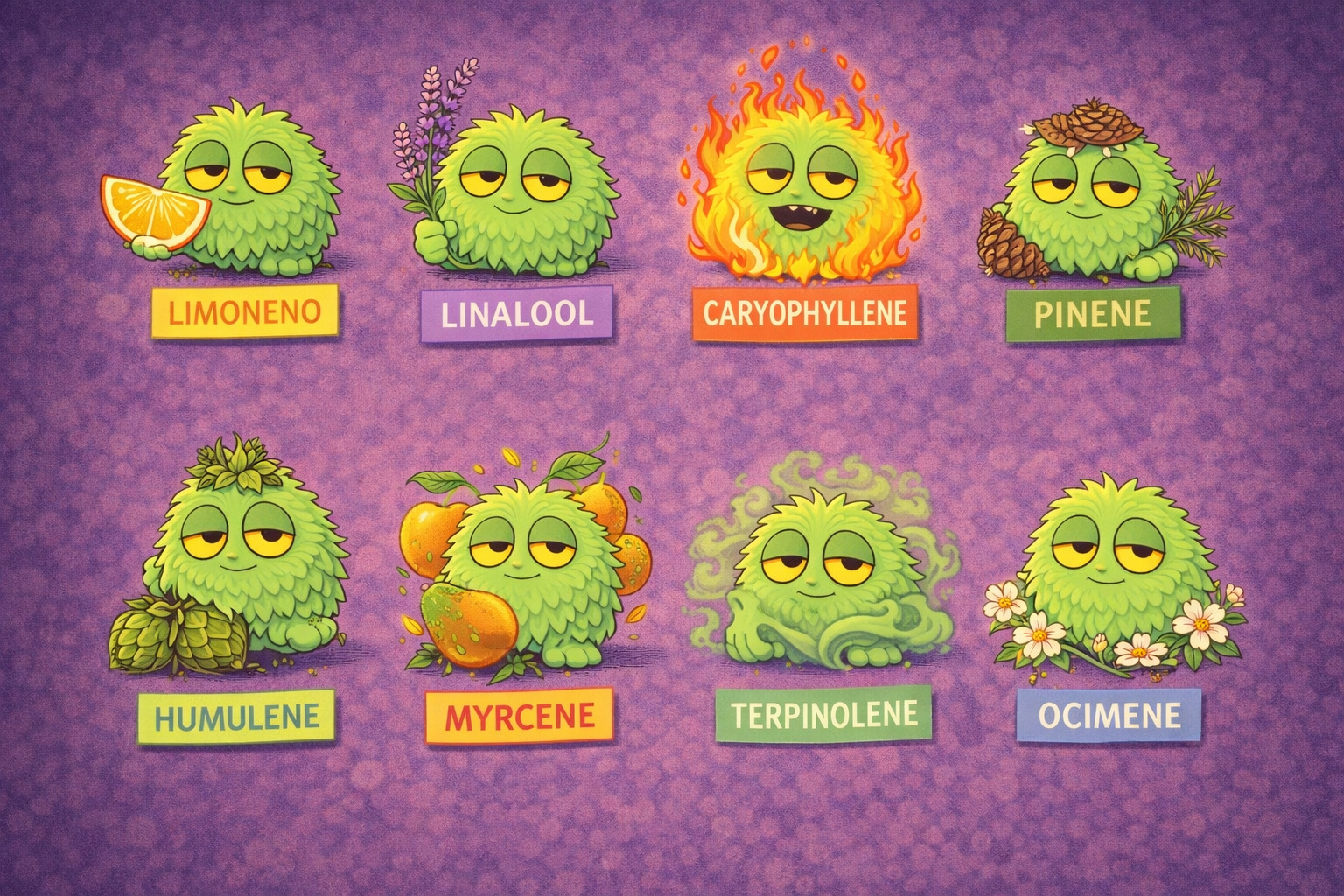
- Myrcene (earthy, musky) — the most abundant. Also in hops and mangoes. Associated with relaxing effects.
- Limonene (citrus) — found in citrus rinds. Associated with mood elevation and stress relief.
- Pinene (pine, fresh) — the most widespread terpene in nature. Associated with alertness.
- Caryophyllene (spicy, peppery) — unique: also binds to CB2 receptors. Anti-inflammatory.
- Linalool (floral, lavender) — the same terpene in lavender. Associated with calming effects.
Sources: Russo, E.B., «Taming THC», British Journal of Pharmacology, 2011; Sommano, S.R. et al., Molecules, 2020.
The entourage effect
The hypothesis: cannabinoids and terpenes work together synergistically, with terpenes potentially modifying how THC affects the brain. The scientific evidence is still building, but the clinical implications are significant for medical cannabis research.
Bibliography: Russo (2011) · Sommano et al. (2020) · Ben-Shabat & Mechoulam (1998).